"It is my opinion, without any reasonable doubt, and without any reservation, that
comic bookssmart glasses are an important contributing factor in many cases of juvenile delinquency."
Take out the strikethrough and that's the actual testimony a psychiatrist gave the US Senate about comic books in 1954, the same year the Comics Code Authority was invented to save America's children from Batman. The target changed, but the sentence barely needs editing.
Here's this week's version, from an r/AskUK thread:
"The correct term you're looking for for 'Smart Glasses' is 'Pervert Glasses,' as that's exactly what they are."
Perv glasses. Ban them. Argument over.
I personally think that's lazy. The fear underneath it is real - nobody's disputing that. Taking one narrow, documented harm and using it to pass verdict on an entire category of device is the lazy part - especially when that category also includes a blind person reading a menu unaided for the first time and a d/Deaf person following a conversation without watching lips. Reduce it to a punchline and you lose both of those people along with the argument.
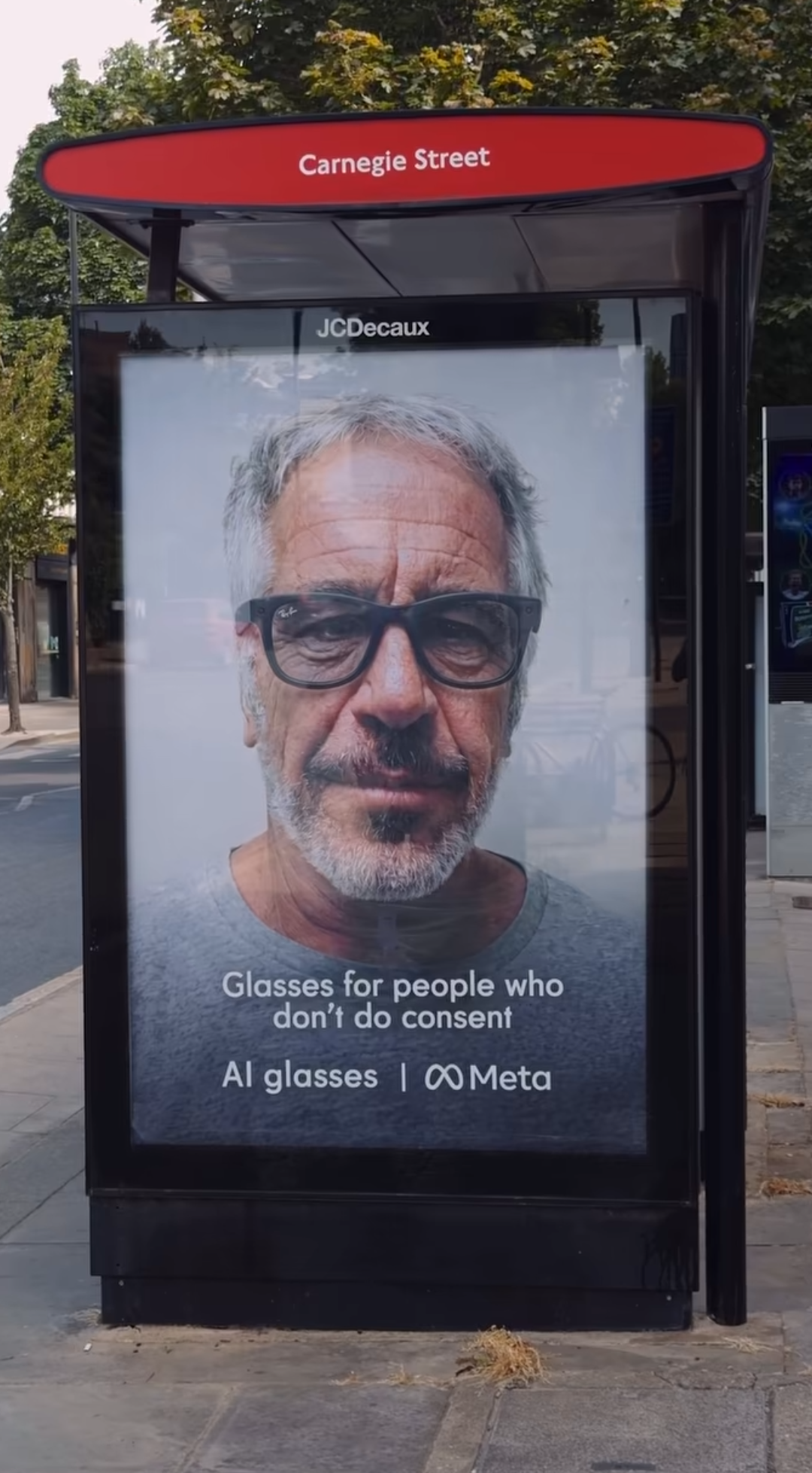
The backlash isn't baseless - it's just aimed too wide
Comic books weren't the only "delinquency" scare. When Kodak's affordable camera arrived in 1888, a stock character called the "camera fiend" turned up at beach resorts, catching women unaware, and some resorts responded by disallowing cameras. Telephones were called "the instrument of the devil". Radio was going to poison children's minds. This isn't the first time a new device has triggered this kind of reaction and, so long as we're innovating, it won't be the last.
To be fair to the panickers, none of this fear was entirely unfounded. The camera fiends really were photographing women without consent. The telephone really did become, almost immediately, a tool for harassment and fraud. Every new medium gets misused by somebody - humans are crap like that.
These panics weren't baseless, but they did draw the wrong conclusion: that the technology and all its users should be treated with suspicion. Nobody solved telephone harassment by treating every phone owner as a scam caller, or camera fiends by banning cameras outright. We've learned to target the fiends and the scam callers directly instead, and have ended up with technology so deeply embedded in our routines that we're unwilling to give them up despite the persistent annoyance of scam calls. Banning them over how a minority misuses them (or, for scam callers, an increasing majority - am I right?!) would be absurd, precisely because the technology has become so essential.
Smart glasses follow that pattern. In January 2026, the BBC identified dozens of men using Meta's Ray-Ban glasses to covertly film women for "pick-up artist" content, including a 21 year old filmed on her lunch break whose footage hit 1.3 million views with her phone number attached. In May, the BBC found that a London woman was filmed in a shopping centre and then told that having the footage removed would cost her money. People also started physically disabling the recording light - frequently enough that Meta had to ship a mandatory firmware update in July 2026 that kills the camera if it detects the LED has been tampered with, on top of pursuing legal action against people selling the modification.
The average Londoner is filmed around 70 times a day
Most consent arguments about smart glasses skip a basic fact: you don't legally have one, in any meaningful sense, the moment you step outside. Under English law, there's no general right to privacy in public. Photographing or filming someone on a street, a bus or in a shopping centre is, as a rule, lawful and needs no consent at all. That's the same principle that lets journalists document a protest, lets a dashcam catch the car that hit yours, and lets London run close to a million CCTV cameras, capturing the average resident an estimated 70 times a day.
So when the loudest objection to smart glasses is "you're filming me without my consent," the honest answer is: what consent? The one that already doesn't exist for the CCTV camera above the newsagent's, the doorbell cam three doors down, or the hundreds of strangers' phones pointed at Oxford Street most Saturdays? If recording someone in public without asking is unremarkable when a shop, a council or a stranger's phone does it, it's a strange place to suddenly find outrage when a pair of glasses does the same thing.
This isn't a defence of the men filming women for content, nor a verdict on whether ambient surveillance itself is fine (there's a real, separate debate about whether a city should run on close to a million cameras, whose footage goes where and who benefits). The actual question is what's new about smart glasses specifically, and it's not the fact that they're recording in public.
What's new sits on top of that: the footage is processed by Meta's AI. "How dare you record me in public" isn't the useful version of this argument, in my opinion. The useful version is what happens to the recording after it's taken, who can search it, and whether you can even tell it's happening. Those are exactly what the ICO and the EDPB are now investigating, rather than the broader, blurrier objections filling the comments sections of the internet.
Regulation always arrives after the damage is already public
The same evidence that proves the harm is real also points to its true source - and it isn't the 'smart glasses' category as a whole. It's a specific, identifiable minority of wearers doing a specific, identifiable thing: recording people without consent to harass, extort or monetise their image.
This nuance is vital, as it's the pattern behind every regulation that's ever actually worked. Ralph Nader didn't get seatbelt laws by banning cars; his 1965 book led to the National Traffic and Motor Vehicle Safety Act the following year. We didn't ban working indoors after the Triangle Shirtwaist fire killed 146 workers in 1911; instead, New York passed over thirty new workplace safety laws. What happened in both cases was that a documented harm produced a targeted fix aimed at the mechanism of the harm, not the tool that made it possible. Regulations are written in blood, as the saying goes - but the ink is usually aimed with more precision than the backlash that preceded it.
Meta doesn't get the benefit of the doubt, though
Meta's own record matters here too. The company has paid more than $7 billion in privacy fines and settlements, including a €1.2 billion GDPR penalty and a $5 billion FTC fine for violating its own prior consent decree. A leaked internal memo, per a coalition of 75 civil rights organisations, reportedly noted that a planned facial-recognition feature would launch while critics were distracted by other concerns - timing the ACLU called "frankly shameful."
Both of these things can be true at once: the fear of smart glasses as a category is disproportionate, while the scrutiny applied to Meta is understandable given its track record.
The people who'd lose the most if this tech was banned
None of this is hypothetical for the people already depending on it. Be My Eyes built hands-free volunteer calling into the glasses, so a blind user can get a stranger's help reading a menu or a bus number without holding a phone up first. Deaf users get live captions through the same camera that so many people are boycotting.
As with most accessibility, the benefits extend well beyond disabled users as well. Hands-free translation in a meeting, navigating without staring at a screen, or making a call while pushing a pram - these are the kind of unglamorous, everyday conveniences that make life easier, just as the landline once did.
This is exactly why my stomach lurches when I read about a blind couple who stopped wearing their glasses in public because strangers kept confronting them, assuming they were secretly filming. The backlash isn't just landing on the creepy men hiding their LEDs: it's also landing on the people who found something that improved their lives and then got treated like suspects for using it in the same public that films them constantly anyway.
Yes, Meta has a poor track record, and the predatory few who misuse these glasses for harassment are undeniably in the wrong. But conflating specific abuses with the utility of the technology itself is a massive mistake. By aiming our outrage at the tool instead of the behaviour, we don't fix the problem - we just stifle the innovation that could, in time, become as essential to everyone as the phone in their pocket.